“Water does not ask for permission before it enters your walls. The only way to stop it is to be prepared before it arrives.”
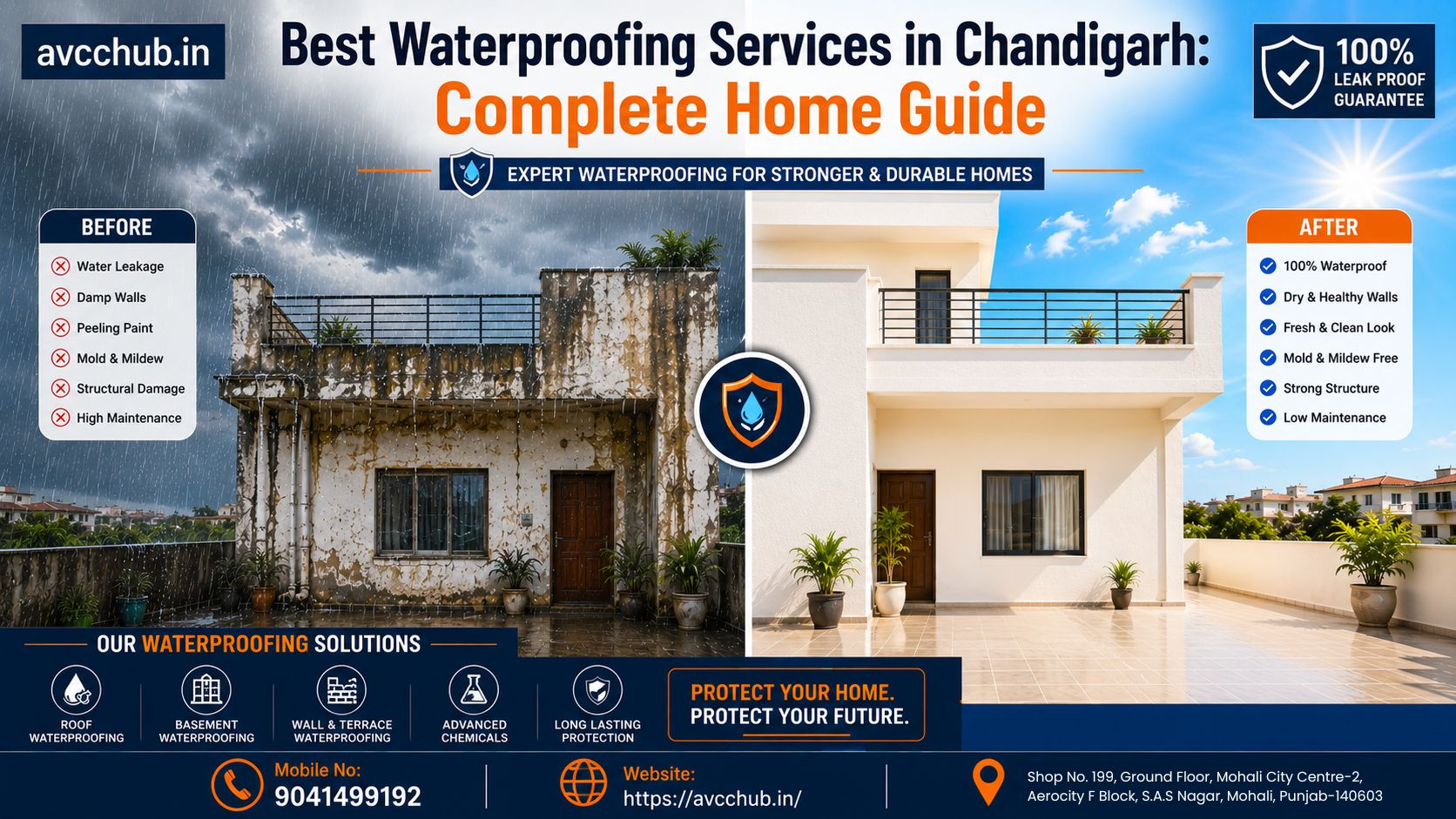
There is a particular kind of helplessness that comes with watching a damp patch slowly spread across your freshly painted ceiling , and knowing that no amount of repainting will make it go away for good. If you own a home or a commercial building in Chandigarh, this scenario may already feel familiar.
The Tricity region, with its intense monsoon downpours, fluctuating seasonal temperatures, and rapid urban construction, presents a uniquely demanding environment for any built structure. Water infiltration is not merely an aesthetic inconvenience , it is a silent, progressive deterioration of your property’s very foundation. And yet, it remains one of the most underestimated aspects of building maintenance.
Waterproofing services in Chandigarh have evolved considerably in recent years, with advanced materials, systematic application methods, and experienced contractors now offering solutions that go far beyond a coat of paint or a temporary sealant.
This blog guide is designed to help homeowners and property managers understand what professional waterproofing truly entails, the problems it solves, the methods it employs, and the significant long-term value it delivers.
Why Waterproofing Is Important for Homes in Chandigarh
Chandigarh’s geographical and climatic character makes waterproofing not a luxury, but a structural necessity. Here is why:
- Heavy monsoon rainfall increases leakage risks. The region receives concentrated rainfall during the monsoon months, and even well-constructed roofs and terraces can develop vulnerabilities that allow water ingress when drainage is inadequate or joints begin to fail.
- Temperature changes cause cracks in structures. The pronounced seasonal shift between harsh winters and scorching summers causes concrete to expand and contract repeatedly. Over time, this thermal cycling generates hairline and structural cracks that become pathways for moisture.
- Poor construction can lead to seepage issues. Rapid construction activity across Punjab and Chandigarh has sometimes compromised construction quality. Inadequate curing, substandard concrete mixes, or insufficient joint sealing during the building phase often surface as waterproofing failures years later.
- Prevents long-term structural damage and repair costs. Water that enters a structure does not stop at the surface. It migrates inward, initiates corrosion of embedded steel reinforcement, degrades concrete, and weakens load-bearing elements , making early waterproofing intervention dramatically more economical than deferred structural repair.
Did You Know?
According to the World Health Organization (WHO), indoor dampness is estimated to affect 10–50% of indoor environments across Europe, North America, Australia, India, and Japan. This means a significant portion of buildings, including those right here in Chandigarh, are silently dealing with moisture-related damage that proper Waterproofing services in Chandigarh can prevent.
Source: WHO Guidelines for Indoor Air Quality – Dampness and Mould (who.int)
Common Waterproofing Problems in Chandigarh Homes
Understanding what to look for is the first step toward timely remediation. The following issues are consistently observed across residential and commercial properties in the region:
- Roof leakage during the rainy season: the most prevalent complaint, often beginning as a minor stain on the ceiling and escalating into structural damage if left unaddressed.
- Wall seepage and damp patches: moisture movement through external or internal walls, typically presenting as salt efflorescence (white powdery deposits), discoloration, or recurring damp stains that return even after repainting.
- Basement moisture and water accumulation: particularly common in areas where groundwater levels are elevated, often compounded by hydrostatic pressure acting against basement walls and floors.
- Cracks in concrete structures: ranging from superficial shrinkage cracks to deeper structural fractures, all of which act as entry conduits for water.
- Peeling paint and mold growth: cosmetic symptoms of deeper moisture problems, often accompanied by a musty odor and deteriorating indoor air quality.
Types of Waterproofing Services in Chandigarh
Professional waterproofing addresses distinct areas of a building, each with its own set of challenges and material requirements. The principal categories of waterproofing services in Chandigarh include:
Roof Waterproofing
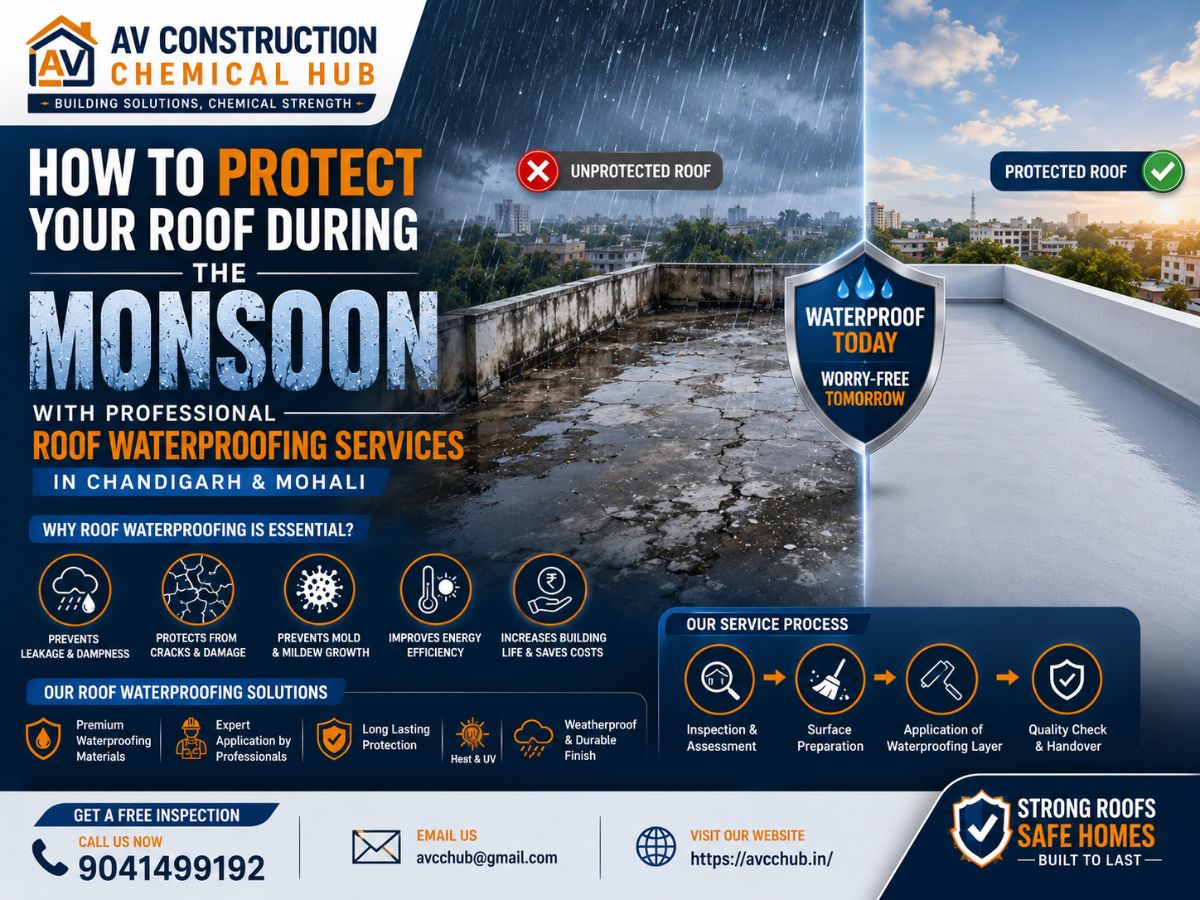
Roof waterproofing addresses one of the most exposure-prone surfaces of any structure. A flat or low-slope RCC roof is perpetually subjected to direct rainfall, UV radiation, thermal stress, and foot traffic. Effective roof waterproofing begins not with the application of a product, but with a thorough inspection , identifying hairline cracks, failed parapet joints, blocked drainage outlets, and areas of water ponding. Treatment involves crack remediation followed by the application of a membrane system engineered for both waterproofing integrity and long-term durability.
Terrace Waterproofing
Terrace waterproofing is a specialized variant of roof waterproofing, particularly relevant where the terrace is also a usable space. Deferred terrace waterproofing leads to a cascade of consequences , damaged ceiling plasterwork, rusted reinforcement steel, and plaster that continues to deteriorate regardless of how frequently it is repaired. A complete terrace waterproofing solution involves the removal of damaged layers, systematic surface preparation, and the installation of a full-system membrane with a protective wearing course.
Basement Waterproofing
Properties across Punjab and the Tricity area frequently contend with elevated groundwater tables. Basement waterproofing addresses the phenomenon of hydrostatic pressure , the force exerted by water in the surrounding soil against basement walls and slabs. Solutions for basements are tailored to actual site conditions and typically employ crystalline compounds or polymer-modified coatings applied either from the positive side (exterior) or negative side (interior), depending on access and structural configuration.
Bathroom Waterproofing
Bathrooms are interior wet zones where water exposure is daily and continuous. Failures in bathroom waterproofing manifest as seepage into adjacent rooms, damaged tiles, and mold growth. Cementitious waterproofing systems are widely employed here due to their excellent bonding to RCC substrates and compatibility with tile adhesives.
External Wall Waterproofing
External walls are the building’s first line of defense against wind-driven rain and water absorption. Wall seepage is often misdiagnosed as a paint problem when it is, in reality, a moisture infiltration issue within the wall matrix itself. Penetrating sealers and elastomeric coatings provide effective protection for external wall surfaces.
Waterproofing Methods and Chemicals Used
The selection of a waterproofing system is not a one-size-fits-all decision. Different surfaces, exposure conditions, and structural configurations call for different approaches.
PU (Polyurethane) Waterproofing
PU waterproofing chemicals represent the premium end of the waterproofing spectrum. Polyurethane-based coatings are highly elastic, UV-resistant, and capable of bridging minor cracks without rupturing. These properties make them exceptionally well-suited for exposed terraces, parking decks, and high-traffic elevated surfaces where both flexibility and durability are paramount.
Liquid Waterproofing Membrane
A seamless, flexible solution that is applied in liquid form and cures into a continuous membrane over the surface. This system is particularly effective for terraces and irregular surfaces where sheet membranes may be difficult to lap and seal. It can be reapplied when required, making it a practically serviceable option.
Cementitious Waterproofing
Cement-based waterproofing systems bond directly to concrete and masonry substrates. They are capable of resisting both positive (water pushing against the coated surface) and negative (water pushing from behind) water pressure, making them versatile for a range of applications including bathrooms, water tanks, and retaining walls.
Bituminous Coating
A time-tested, cost-effective waterproofing solution for below-grade applications such as foundations, retaining walls, and underground structures. Bituminous coatings perform reliably in environments where UV exposure is not a concern, making them an industry standard for substructure waterproofing.
Crystalline Waterproofing
Perhaps the most technically sophisticated category , crystalline waterproofing agents react chemically within the concrete matrix, permanently sealing capillary pores and micro-cracks. This approach is particularly effective for water tanks, underground structures, and basements where an externally applied membrane would be impractical or inaccessible.
Which Waterproofing Method Is Best?
The optimal system is always determined by the specific context of the surface and the nature of the moisture problem. As a general framework:
- PU Coating: Best for exposed roofs and terraces requiring flexibility and UV resistance.
- Cementitious Systems: Best for bathrooms, water tanks, and wet interior areas.
- Bituminous Coating: Best for foundations, retaining walls, and below-grade structures.
- Liquid Membrane: Best for roofs, terraces, and irregular or complex surfaces.
- Crystalline Systems: Best for basements, water tanks, and structures requiring internal, long-term protection.
A qualified waterproofing professional will assess the substrate, moisture source, structural condition, and access constraints before recommending an appropriate system.
Signs You Need Waterproofing Services
Many property owners seek waterproofing remediation only after significant damage has already occurred. Recognizing early indicators can prevent far costlier interventions:
- Damp patches on walls: Persistent discoloration or wet spots, particularly after rainfall.
- Water leakage from the ceiling: Visible dripping or water staining on ceiling surfaces following rain.
- Musty odor in rooms: A reliable early indicator of concealed moisture and mold activity.
- Peeling paint or bubbling walls: Moisture vapor pushing outward through the wall surface, rupturing the paint film.
- Visible cracks in the structure: Particularly cracks that appear to widen seasonally or show moisture staining around their edges.
Benefits of Professional Waterproofing Services
Investing in properly executed waterproofing services in Chandigarh yields measurable, long-term advantages:
- Increases building lifespan: Dry structures age more gracefully, experiencing less cracking, spalling, and plaster deterioration over time.
- Prevents structural damage: Stopping moisture before it reaches embedded steel reinforcement prevents corrosion, a progressive and expensive structural problem.
- Improves indoor air quality: Eliminating damp conditions removes the primary environment in which mold and mildew thrive, making interior spaces healthier.
- Reduces maintenance costs: A single professional waterproofing treatment executed correctly delivers far greater value than repeated cosmetic patch repairs conducted over several years.
- Enhances property value: A structurally sound, waterproofed building commands greater market value and presents better in any property transaction.
How to Choose the Best Waterproofing Contractor in Chandigarh
The quality of waterproofing work is determined as much by the contractor as by the materials used. When evaluating service providers, consider the following criteria:
- Check experience and previous work: Ask for references and, where possible, visit completed projects to assess workmanship quality.
- Ask about materials and methods used: A credible contractor will be transparent about the specific products employed and the application process, including surface preparation steps.
- Ensure proper site inspection: Any professional assessment should begin with a thorough on-site evaluation of affected areas, moisture levels, and existing conditions before any recommendation is made.
- Look for a warranty or guarantee: Workmanship warranties are an indicator of a contractor’s confidence in their own work and their commitment to accountability.
- Compare pricing and service quality: While cost is a consideration, prioritize demonstrated expertise, quality materials, and systematic processes over the lowest-priced proposal.
Waterproofing Cost in Chandigarh
Waterproofing is not a commodity service where a fixed rate can be universally applied. The cost of any waterproofing project depends on a combination of variables:
- Area size: the larger the surface requiring treatment, the greater the material and labor investment.
- Type of damage: the severity and extent of existing water damage, including the presence of structural cracks, failed membranes, or accumulated moisture, directly influences the complexity and cost of the remediation.
- Method used: high-performance systems such as polyurethane coatings or crystalline treatments carry a higher material cost than conventional cementitious solutions, though they often deliver a superior service life.
- Material quality: Premium-grade waterproofing products deliver better longevity and performance, representing a more favorable long-term investment even if the upfront cost is higher.
A professional site visit and inspection is the only reliable basis for an accurate project quotation.
Why Choose Local Waterproofing Experts in Chandigarh
Engaging waterproofing professionals who are based in and familiar with the Chandigarh region offers practical advantages that go beyond proximity:
- Better understanding of local climate: local professionals have direct, experiential knowledge of how the monsoon, summer heat, and winter cold affect building materials in the Tricity area.
- Knowledge of common building issues: familiarity with prevalent construction typologies and the specific failure modes common to the region enables more precise diagnosis and appropriate treatment.
- Faster service and support: local presence allows for quicker site visits, faster mobilization, and more responsive after-service support.
- Cost-effective and reliable solutions: regional contractors are able to offer competitive pricing without the logistical overhead associated with outstation service providers.
Final Thoughts
Water, in its relentless and indiscriminate nature, will always seek the path of least resistance through a structure. Protecting your property from its ingress is not a reactive measure , it is a proactive investment in the longevity, integrity, and value of your building.
Whether your concern is a dripping terrace, a damp basement, persistent wall seepage, or pre-emptive protection of a newly constructed property, the right waterproofing services in Chandigarh can provide durable, technically sound solutions. The key lies in selecting an experienced contractor who conducts a thorough site assessment, recommends appropriate systems rather than generic applications, and backs their work with accountability.
AVCC Hub (AV Construction Chemical Hub), based in Mohali and serving Chandigarh and the wider Punjab region, provides professional waterproofing solutions for residential, commercial, and infrastructure projects. Their team conducts on-site inspections, employs quality materials, and offers workmanship warranties, an approach grounded in practical expertise rather than overselling.
If your building is showing signs of moisture intrusion, the best time to act is before the next monsoon arrives.
Frequently Asked Questions (FAQ)
Q1. What is the best waterproofing method for roofs in Chandigarh?
Ans. PU (polyurethane) coatings are widely regarded as the best option for exposed roofs and terraces. They are elastic, UV-resistant, and durable through seasonal extremes.
Q2. How often should waterproofing be redone on a terrace?
Ans. A professionally executed terrace waterproofing system typically remains effective for several years. Longevity depends on the quality of materials used, the application process, and the level of maintenance.
Q3. Can waterproofing be done during the rainy season?
Ans. Most waterproofing systems require dry, clean surfaces for proper adhesion and curing. While some products can be applied in slightly damp conditions, professional assessment is necessary before proceeding during or after rainfall.
Q4. What is the difference between terrace waterproofing and roof waterproofing?
Ans. Both terms often refer to the same surface. Terrace waterproofing typically implies a usable outdoor space requiring protective topping and durability underfoot, while roof waterproofing may involve areas not accessed regularly. The system selection varies accordingly.
Q5. How do I know if my basement needs waterproofing?
Ans. Indicators include a persistent musty smell, visible moisture on walls or floors, white salt deposits (efflorescence), rusting fixtures, and any standing water after rainfall. A professional inspection will confirm the severity and recommended course of action.