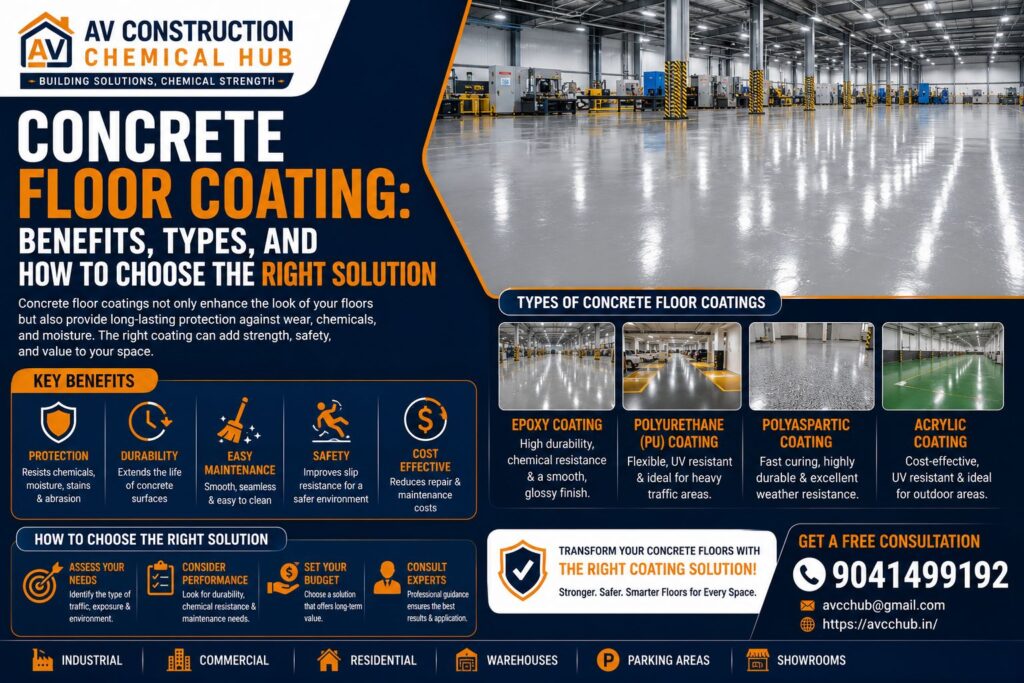
Walk into any garage, warehouse, or retail store with bare concrete floors, and you’ll notice something after a while the surface starts to look tired. Dust, cracks, stains, that dull grey color that never quite looks clean no matter how much you mop it. Concrete is tough, sure, but it’s not invincible. It needs help to stay that way.
That’s really what Concrete Floor Coating is for. It’s not just about making a floor look nicer (though it does that too). It’s about giving concrete a fighting chance against everything that gets thrown at it spills, foot traffic, heavy equipment, moisture creeping up from below.
I’ve spent a good bit of time around flooring projects, and if there’s one thing I’ve learned, it’s this: people usually don’t think about their floor until it’s already a problem. By then, you’re looking at repairs instead of prevention. So let’s talk about why coating matters, what your options are, and how to pick the one that actually makes sense for your space whether that’s a home garage or a busy manufacturing floor.
What is Concrete Floor Coating?
Simply put, concrete floor coating is a protective layer you apply on top of a concrete slab. Think of it like a shield; it doesn’t replace the concrete underneath, it just makes sure the concrete doesn’t have to fight its battles alone.
Once applied, the coating bonds to the surface and seals it up, so water, oil, and other liquids can’t soak in and cause damage. That’s also why getting the surface properly prepped before coating matters so much, skip that step, and the coating won’t stick the way it should.
You’ll find concrete floor coating almost everywhere:
- Homes — garages, basements, patios
- Businesses — retail shops, healthcare buildings
- Industrial spaces — warehouses, factories, production floors
Every one of these spaces puts different pressure on a floor, which is exactly why there isn’t a single “best” coating. It depends on what the floor has to deal with day to day.
Benefits of Concrete Floor Coating
It Makes the Floor Tougher
Untreated concrete wears down faster than people expect. A good coating adds a layer of strength on top, so the floor can handle foot traffic, rolling equipment, and daily wear without breaking down early.
Chemicals and Stains Don’t Stand a Chance
Oil, grease, cleaning products, these things soak into bare concrete and leave marks that don’t come out. A coated floor pushes back against that, keeping stains on the surface instead of locked in.
Cleaning Becomes Way Less of a Chore
Since coated concrete is smooth and sealed, dirt has nowhere to hide. A quick sweep and mop usually does the job, instead of the scrubbing sessions bare concrete demands.
Safer Footing, Fewer Slips
Some coatings come with textured or anti-slip finishes, which matters a lot in spaces where water or oil might end up on the floor. It’s one of those benefits people don’t think about — until someone almost slips.
It Just Looks Better
Coatings aren’t only functional. You can get a glossy showroom shine, a decorative flake pattern, or something more understated — whatever suits the space.
Saves Money Down the Road
Instead of tearing out and replacing a worn-out floor, a coating extends its life. It’s the kind of upfront decision that quietly saves you a bigger repair bill later.
Types of Concrete Floor Coatings
Epoxy Floor Coating
Epoxy Floor Coating is probably the name you’ve heard the most, and there’s a good reason for that. It’s made by mixing resin with a hardener, and once it cures, you get a hard, tough surface.
- What it offers: strong resistance to scratches, heavy loads, oil, and chemicals, plus plenty of color and finish choices.
- Where it falls short: direct sunlight over time can cause it to yellow a bit, so outdoor use isn’t its strong suit.
- Best used for: garages, warehouses, and any space where heavy equipment rolls through often.
Polyaspartic Floor Coating
This one cures fast, really fast and holds up well against UV rays, so it doesn’t yellow the way epoxy can.
Because it sets so quickly, it’s a favorite for places that can’t afford to shut down for days during installation. It’s also flexible enough to resist cracking under pressure.
- Good fit for: commercial spaces that need a quick turnaround without sacrificing durability.
Polyurethane Floor Coating
Polyurethane brings flexibility to the table, along with solid resistance to scratches and impact. It handles temperature swings better than most coatings, which matters in places like cold storage or food processing areas.
- Good fit for: environments where the temperature shifts often, or where heavy machinery is a daily reality.
Acrylic Concrete Coating
Acrylic is the simple, budget-friendly option. It’s water-based, dries fast, and goes on easily.
- Good fit for: patios, walkways, and other light-duty areas that don’t see much heavy traffic.
Concrete Sealers
Sealers work a little differently, instead of forming a thick top layer, they soak into the concrete and close up its pores, cutting down on moisture absorption and surface dusting.
Some sealers are made for the outdoors, built to handle weather and sun. Others are meant strictly for indoor use, where those concerns don’t apply.
How to Choose the Right Concrete Floor Coating
Picking the right coating isn’t complicated once you break it down:
- What’s the floor actually used for? Parking cars, running machinery, or greeting retail customers all call for different things.
- How much traffic does it see? Heavier use needs a tougher coating.
- Will it face chemicals or moisture? If so, you’ll want a coating built specifically to handle that.
- Is it indoors or outdoors? Sun and weather exposure change which coating makes sense.
- What’s your budget, and how much upkeep are you willing to do? Some coatings need more attention than others.
- What look are you going for? Glossy, matte, decorative — your choice should match both function and style.
Residential vs. Commercial Concrete Floor Coatings
At Home
- Garages: A solid Garage Floor Coating handles oil drips, tire marks, and everyday wear while making the space look a lot more put-together.
- Basements: Coatings help manage the moisture problems that below-ground spaces often deal with.
- Patios: Outdoor-rated coatings hold up against sun, rain, and temperature changes.
In Business
- Retail stores: A Commercial Concrete Floor Coating gives shoppers a clean, polished first impression.
- Warehouses: These floors need coatings tough enough for constant equipment traffic.
- Manufacturing plants: An Industrial Concrete Floor Coating stands up to heavy machinery, chemical spills, and round-the-clock use.
- Healthcare facilities: Clean, easy-to-sanitize floors aren’t optional here — they’re essential.
Mistakes People Often Make
- Picking a coating that doesn’t match the space’s actual needs
- Rushing past surface prep (this one causes more problems than people realize)
- Ignoring moisture issues hiding underneath the slab
- Trying a DIY job without knowing what you’re doing
- Forgetting the floor needs care even after it’s coated
Keeping Your Coated Floor in Good Shape
- Clean it regularly so dirt doesn’t build up
- Skip the harsh chemicals — they can wear down the coating faster
- Be mindful of heavy impacts where you can
- Check in on it now and then for early signs of wear
- Reapply a protective topcoat once the shine starts to fade
Why It’s Worth Hiring a Professional
Coating a floor isn’t as simple as rolling product onto concrete and walking away. Getting the surface ready, picking the right product for the job, and applying it correctly — all of that shapes how long the coating actually lasts.
Professional installation usually means the coating lasts longer, comes with a warranty, and just looks better overall. It’s one of those jobs where cutting corners tends to cost more in the end than it saves upfront.
Frequently Asked Questions (FAQs)
Q1. How long does concrete floor coating last?
Ans. With good installation and care, it can protect your floor for a long stretch before needing a refresh.
Q2. Which concrete floor coating is the most durable?
Ans. Polyurethane and epoxy tend to hold up best in heavy-use spaces.
Q3. Is epoxy better than polyurethane?
Ans. Not really “better”, just different. Epoxy handles heavy loads well; polyurethane deals better with flexibility and temperature shifts.
Q4. Can concrete floor coating be applied to old concrete?
Ans. Yes, as long as the surface gets cleaned, repaired, and properly prepped first.
Q5. How much does concrete floor coating cost?
Ans. It depends on the coating type, the floor’s condition, and the size of the space. A quick site visit gives the clearest answer.
Conclusion
At the end of the day, concrete floor coating isn’t just about appearances, it’s about giving your floor the protection it needs to actually last. Whether you’re drawn to the toughness of epoxy, the flexibility of polyurethane, or something simpler like an acrylic finish, the right choice comes down to what your space really goes through day to day.
There’s no universal answer here, and that’s okay. Take a good look at your traffic, your exposure to moisture or chemicals, and your budget, and the right coating usually becomes pretty clear.
If you’re still weighing your options, it might help to talk it through with people who deal with this every day. The team at AVCC Hub (AV Construction Chemical Hub) can walk you through what makes sense for your specific floor.